
21 Years of South Chicago ABC Zine Distro
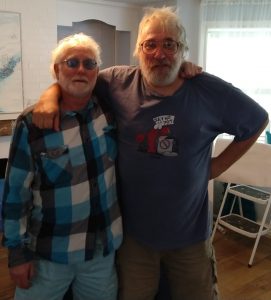
This week on The Final Straw, we’ll hear a conversation from a few month back with Anthony Rayson and Mike Plosky, who have run the South Chicago Anarchist Black Cross Zine Distro since 1998. They send zines to prisoners, publish the writings and art of politicized prisoners as a project of public education, and help advocate and support prisoners organizing for their own education and liberation.
You can find a full catalogue of zines at DePaul University library’s zine special collection. Donations can be made to their GoFundMe, and you can request catalogues and titles or just contact them at:
South Chicago ABC Zine Distro
PO Box 721
Homewood, IL 60430
Transcription
Sean: How are you guys doing?
Anthony: We’re doing groovy. We’re at my new house. I got a gigantic garage. I got my distro set up in there.
Mike: Sean for president 2020!
S: It’s no longer a pool table?
A: For wrestling on the pool table. I got an attic to get a whole nineteen John Brown combatants.
M: With pikes.
[all laugh]
S: I didn’t call and interrupt the interview, did I?
A: No, we haven’t started yet.
M: Just about to begin. How’s Virginia?
S: This is recorded, and I don’t want to give too much away, because they might actually change things if they find out. But it’s fantastic compared to Ohio.
M: Oh, yeah?
S: Everything is better. Food is awesome. I can go outside for eight hours a day. I got a sunburn. I had to look up at the manual and see what that was. I didn’t know what that was. This bright shiny thing in the sky was amazing. Everything’s great here, you know, compared to there.
A: I’m not too fond of Ohio, but it’s okay, I guess. If there is nothing else, you’re definitely better off in Canada…
S: The economics of Ohio essentially revolve around tourism, colleges, prisons, and agriculture, and that’s about it.
A: What’s to be a tourist about?
TFSR: Prisons and agriculture.
A: You go visit the prisons, that’s what I do.
M: Kent State.
A: Go visit Kent State and see where they shot these people.
S: If you go visit a prison and attend the class while you’re there, you hit the trifecta, essentially, or if you just come pick potatoes, because it’s one of the big three in Ohio. That’s really all there is.
A: I’m not too fond of their teams, so I ain’t gonna go there very much, because you’re not there anyway.
TFSR: Sean, what are you working on these days?
S: What am I working on?
TFSR: Yeah.
S: I finished Ohio Part Four. I told Casey I gotta send him 28 consecutive emails, because I typed it in for an electronic copy, so LBC is thinking about that. I’m back on the campaign trail, running for president in 2020.
A: You should get Joshy Stewart for your vice president, and he was the anarchist vice president for Kennedy in 1960, and he’s still alive, about 90.
S: Is he dedicated to bringing down the United States?
A: Oh, yeah.
TFSR: He apparently doesn’t have a very great track record, if we’re still talking about this now.
M: What’s his platform?
A: He is a pacifist anarchist.
TFSR: Oh, this is a problem.
A: But he’s a cool guy anyway. I like him, even though he’s kinda off the wall.
S: If he’s up for taking down the United States, and I’ll put him on the ticket, just in case they shoot me.
A: I’ll tell him. I’ll run it by. Anyway, we missed you, man. I got your address. I’m gonna write you and send you some cool zines.
S: Oh, awesome! I can always use those. Do you have an archive of your zines that’s available online at DePaul University?
A: There’s a list of it through DePaul, but it’s just a list of titles, I think. But they’re really ramping their efforts up to provide these zines to prisoners. They got a guy working full-time on it, and he’s got a young Black radical assistant who’s totally in love with it. Because they’re getting paid to do the work that we do for nothing, send these killer zines, and then DePaul’s paying them to do it. It’s awesome, and they’re sending in a ton of stuff. The guy’s dedicated; he came on this visit with me, and they’re going to come out and see this new setup I got. They do a lot of work; they pretty much double our capacity.
S: Oh, wow! That’s always good.
A: Yeah. This guy came on about three years ago, and he’s really a go-getter, really cool. He’s an old riot grrl kinda punk, anarchist. He just happened to be an archivist now, a librarian at DePaul, and wiggled his way to this job, because the policy is they got is, they call it Special Collections Library: all this stuff, old stuff, most of it’s zines that no one cares about, because they’re talking about what they’re picking out of their navels. Then our zine, serious anarchist shitload of zines. It should be treated the same way, since they accepted my collection in 2008. They got to go through with their policy of providing what anybody wants. They didn’t say no prisoners allowed; they sent it. No one wants those other crappy zines, so it’s 99% our zines. We’ve basically taken over the Special Collections. Now he’s doing presentations at other libraries, trying to get them going with it, and getting the teachers to bring the students in there and start their own zines and read all this shit. It’s really cool. Then, a couple of months ago, they had a Chicago Zine Fest, it was the 10th anniversary, and they featured me. We went to DePaul, and we had a big seminar, and blah blah, we’re talking about this shit. They even gave me 100 bucks. All the other people on the panel only got 50. I wasn’t supposed to tell you that, sorry. Anyway, the whole shebang is over there, and every year or so I’ll send them a whole shitload of new zines and artwork, or whatever I’ve got, and they’ll take it all.
S: I am glad that is now available that way, because the outreach is important. The material is already there, all that is just fantastic material, and now it’s available even beyond. The crazy thing is that when Travis and I sent you Last Act, we wrote this thing, and that’s when our work ended, just throwing it together, and then we sent it to you. I was getting mail from St Petersburg, Russia, a year later.
M: Classic!
S: You got that zine like all over the world. I have never seen anything like that. I have to imagine your wife probably didn’t know how much money you were spending on copies. Because I imagine she would have shot you, and it had to have been a small fortune, because of all the places that all of this stuff was going.
A: We’ve got to fill that demand, and you’re not the only one. A lot of this shit went all over the place, and now it is all over the place. Nowadays, researchers are looking for the real deal stuff. Here we are. We keep churning it out, that’s all. Why shouldn’t we? It’s a hell of a gig.
S: That’s the other thing I was thinking about, because you weren’t just cranking out Last Act as a full-time job; you had a million other things that you were cranking out at the same time. Those were getting everywhere also.
A: Once prisoners get their hands on this stuff, they start scheming ways to reproduce it. I get letters all the time from guys who work in the library and have access to a copying machine. Guess what they’re copying! Zines. Sneaking them into books, all of that. I just got a letter from a guy saying that from our zines, they decided to have a hunger strike down in Texas, which they won. Yeah, it’s important stuff. Why waste time trying to get a book published with some bullshit when you’ve got real ideas? Just put them out there — write, edit, publish, distribute, and keep going.
S: Absolutely. I have to think. When I first got in contact with you, I wasn’t a self-identifying anarchist — I was probably a socialist, maybe. But in the reading, I identified with a lot of things I hadn’t encountered before. Looking back at that point, that was 2005, about 14 years ago now, and at how the political climate in the world has altered since that time — there’s been a radical shift in the number of people who are now consciously rebelling against the system and standing up and demanding direct democracy. Hong Kong, and everywhere else. I have to think that no small part of that comes from copying machines, pool tables, and places in South Chicago.
A: Look at Russia, the samizdat press, that’s what this is of America.
Sean: What’s that?
A: Russia had the samizdat press — they had a real challenge getting access to a copy machine, so every copy was precious. Copy machines are very important. It bubbles up from below the ground. We don’t have to be on Channel Nine News; we just have to get into the hands of prisoners and people who give a damn about what’s going on.
The internet — you Google “anarchism,” this stuff makes sense. Young people coming up now basically consider anarchism a legitimate philosophy, which obviously it is, but not many people had heard of it before. The internet changed that. AK Press, the ABC zines, instant internet access to anything you want. “I don’t think these guys are telling me the truth. I will look it up.” Same with anarchism, cause this is what we specialize in. The crystallized truth.
People respond to anarchist analysis, to the storytelling, the fervor and courage — it makes tingles go up your spine when you read this stuff; it has an effect. It doesn’t put you to sleep like some Marxist crap. It livens you up.
Sean: Freedom resonates with people.
A: Yes. They like it. They want it. But how do they get there? That’s the problem. How do we think our way to that point? How do we move? How do we gather the forces to deal with this?
I look at this pathetic society and think: God damn, do they need to be deprogrammed, genuinely educated, and treated as human beings for a change? The only time in their life, probably. People are so bitter and angry and nasty; they’ve got nothing to lean on, nothing to go with, nothing that resonates with their innate humanity — and so they watch these shows where everyone’s killing each other, stupid kids, cops, lawyers, judges, and pigs. Nobody needs that. It melts your mind. You might as well take fentanyl.
S: And when you’re striving for freedom, you can either strive for it, or else you can have a Marxist organize it for you.
A: Try to get the chance in unison. Sit through a boring four-hour lecture that doesn’t mean a fucking thing.
S: They will choreograph your freedom.
A: You’re free now. Enjoy your GULAG stay, and you’re shot by the firing squad for your services.
S: Pay no attention to that guy in the corner with the shotgun.
A: Marx was a great guy; he only killed 50 million people.
S: What new projects do you have happening?
A: I’m trying to reorganize this distro, which is an insanely massive project cause it’s so vast. I’m doing a few little mini zines on the side, but mainly I’m just trying to get organized — put things into sections and categories so I can sift through them later.
There’s a big bag or two-
Automated voice: “You have one minute remaining.”
Sean: In my experience, sometimes you have to carve out time to sit down and write, because the time’s never going to make time for itself. That’s what I do — I’ll be in the middle of chaos and say, what, I’m going to take three hours and write something today. Everything else can wait, because it’ll still be there when I’m done.
Automated voice: “Thank you for using GTL.”
A: That’s how it ends.
TFSR: If y’all wouldn’t mind, whoever’s going to talk in the conversation, introduce yourself however you want to: first name, moniker, and what this stuff is that y’all work on together.
A: My name is Anthony Rayson, aka Mr. Thought Bombs. I am doing the South Chicago ABC Zine Distro. I work with Mike, who’s here too, on that. I’ve been doing this since 1998, among other things. We’re both very serious grassroots activists in this area as well. We work out of the South Chicago suburbs or ex-suburbia, where it turns into the cornfields. We’ve been involved in fights against huge airports and immigration detention prisons, and private tollways and all these things they’re trying to impose on the rural areas in the hinterlands of Chicagoland. But mainly we work on this anarchist-driven zine distro that focuses on prisons, because I consider them the ground zero of the struggle here at home.
We use prisoners’ writings and artwork to tell the truth about what’s going on in there and in society in general. Plus, we have other educational publications available for different subjects that people are interested in and need to learn about. We have a catalog listing over 1200 of these zines, which we offer freely to prisoners. That’s what we do. It’s an educational service, and we think it’s very important for people to know. One of the things they need to know. We’ve been involved in demonstrations and meetings, organizing grassroots groups, and all this social movement work. Now we’re getting a little older, so we think we’re just going to focus on imparting the wisdom we have collected from many centuries of brilliant thinking and analysis, plus our own, so that people have somewhere to go with their thinking and their actions, to guide their actions in the innately humanistic manner in which everyone should and deserves to exist. Because, Mikhail Bakunin said, above all, respect for humanity.
M: My name is Mike. I’ve been working with Tony on this project for 15 years. A fellow anarchist in Chicago hooked me up with Tony, and I liked his activism and teaching style. I’m the one who gets the letters, goes through them, writes the envelopes, and staples the zines. I really appreciate it when prisoners say they have study groups for what we send in and that they pass zines around the cell block. I’d say 90% of the zines go to prisoners. I’d like to see more infoshops, universities, and bookstores also distribute and manifest what we send in.
I started my activism in the late 1980s with animal rights groups in Chicago, protesting fur stores and veal restaurants on Michigan Avenue downtown. I evolved to this because I can see my hands-on work and how it’s liberating people’s minds from the warped conditions they’ve been programmed into over the last decades. I give talks at Unitarian churches on the history of anarchism and war, which are much appreciated. Just last night, I talked at the Unitarian Church, the week before in a local library, and it was very well received.
Right now we’re sitting in during a Chicago teachers’ strike, in the third-largest school district in America. These people are on strike for more money or more benefits, and Tony and I are so altruistic that we don’t get paid to teach; we pay to teach. These stamps, envelopes, printing, ink, and whiteouts all come out of our pockets. That’s why, if anybody can, we appreciate donations of Forever Stamps to South Chicago ABC PO Box 721 Homewood, Illinois 60430. Thank you.
TFSR: Mike, you mentioned how you got into politics. Anthony, how did you?
A: I was born into it, basically, my father was a unique progressive Democrat, when it was actually possible to be a Democrat. He was a state rep for 12 years, from 1965 to 1977. Some of the bills that he introduced were legalizing abortion. He was the number one advocate for abortion rights in Illinois before Roe v. Wade. He was getting death threats and all this stuff. He was also a civil rights activist. He went down with the Freedom Riders as a lawyer to fund and bail these guys out of jail. He dragged us to Milwaukee to hang out with Father Groppi and Dick Gregory, and to the Freedom Marches up there, and to Chicago with Martin Luther King. I was a school kid for that. I was 13 years old when it came down. I was there, so I was born into it, basically.
The house was full of books full of freedom-screaming truth, even with a liberal cast to it, but it was the explosive ‘60s, so I was a yippy before I was 15. I went from there. I took a bus on the SDS to the war forum in Washington in ‘69. I was 15 or 16. By this time, there were a bunch of Maoist PL guys. I thought, okay, I’ll go there and hang out with them. Then we go to the Moratorium, there were a hundred people there, and there are different sections, there’s turmoil, there’s trying to be really peaceful, blah blah. Supposed radical Marxists went to the Labor Department to have a rally, because the G’s were on strike, 135,000 workers were on strike. I climbed up on the big lion they had in the front, waving this flag. I’m just a 16-year-old kid, and everyone’s screaming “Strike,” 7,000 people: “Strike, Strike, Strike.” Then a little while later, the fucking yippies start coming through the street on the way to battle at the Justice Department, 10,000 strong. It was just so intoxicating, I just got sucked into it, and I couldn’t resist going with them.
TFSR: They were ready for battle at that point?
A: Oh yeah, they knew what they were dealing with. It was amazing. But I, after about half a mile, I was like, “Shit, I am a kid, I gotta go back to these communists to try to get beer out of them, or a cigarette, because I gotta get a bus ride home to Chicago.”
Then I was real active in high school, anti-war and being a hippie, pro-marijuana, against all authority, being a normal kid, being an anarchist. Then I went to college, and it really sucked. I hated it. In the spring of ‘72, the whole country went on strike, all the colleges and universities, because Kissinger and Nixon went to Cambodia for the second time illegally. Killing thousands of people every day. We went on strike. My school went on strike one day. I said, “Fuck this. I can’t. You guys have got to be kidding.” A friend of mine from Chicago came and said, “Fuck it, let’s get out of here.” Just started hitchhiking. There was a guy in Salt Lake City that we knew. “Let’s go see him.” We hitchhiked there, then knocked on this door at 2 am.
“Hey, it’s us, Greg from Chicago, open up.” This guy opens up. It’s not our friend. I said, “We are just kids from Chicago.” The guy let us stay on his couch for a week, and we went to the foothills of Salt Lake and so on. The guy’s really cool. We’re coming down from the foothills, and we saw cop lights all over the place. “What’s going on down there? Let’s check out.” We walk over there, and find our buddy Dave. He’s part of the march. Bobby Seale was there leading a Black Panther March. The pigs are breaking in this Mormon state. It was awesome. He’s got his hand in his pocket, he’s got a bowl, he’s got a bag in his pocket. He’s actually lived a corner from this guy, we just got the street in Northwest, or whatever it was.
That was the beginning of a two-year hegira that I had going on, living in communes, hippie crash pad, doing this, getting busted, almost getting killed, doing all this crazy stuff, like a real education, instead of the bullshit programming to turn into a homogenized bourgeois ‘intellectual’. Fuck that. It was awesome. I used about four out of my nine lives on that one.
I got back home, “All right guys! Let’s go, revolution, man!” It’s 1974, Nixson’s going down, all these scumbags are getting their asses kicked, and we’re gonna fucking stop this fucking military juggernaut bullshit. What? Everyone else was saying, “Since I’m not getting drafted anymore, I think I’d rather just go to the disco. They didn’t have the education that I had. I was born into it.
M: Your father was an-
A: He was an awesome dude for being just a liberal lawyer. He did some kooky shit, but I always took it to the next few levels. All my siblings, that’s as far as they go. One guy’s a Trotsykist.
M: I gave Tony’s mother, who’s now 95 years old, a birthday card. I wrote, “Thank you for raising such an activist-oriented family,” and she said, “Mike, their father had a lot to do with that also.” Tony is six years older than me. I was born in 1958, but some of my earliest memories were seeing Buddhist monks in South Vietnam self-immolating, which means setting themselves on fire to protest our intervention in that country and propping up such an evil government there. Then I remember Kent State, when the four students were killed in Ohio, as Neil Young sang about it. But my family was more of a Democratic machine outside of Chicago, so they were not radical abolitionist anarchists. Anarchism has a bad connotation and a bad name because I think every populace would benefit from living in a world beyond war and beyond political and religious ideologies. In the end, we all have to be caretakers and stewards of creation. So that’s my goal.
A: You mentioned Kent State, and it just reminds me of Jackson State, when the fucking National Guard shot people in the dorms.
TFSR: All missed.
A: All missed? Okay. Because that was taking it to El Salvador or something. But that’s what this country has always been about. Jesus, most hypocritical evil creation, worse than fucking ever, because it’s still going, there’s no accountability for all the genocides they create, perpetuate on all the continents and the whole world that they’re destroying. To see the pinnacle of evolution is this brain disease that they’re forcing on everybody to accept this continuous degenerative crap. So young people want to live; they want to have families; they want to be adults; they want to survive; they want to care. What happened to the so-called baby boom generation? What a bunch of fucking disgusting fascists they had turned into! It’s disgusting to have to be a representative this group. You have a few decent individuals who are pretty cool. But what the fuck? Look at the jerks that are in power now, and in the last decade or so. It’s the same crap that has always been, only even more degenerating, despicable.
M: They’re satiated by materialism, whereas Tony and I have such broad ideologies of abolition. Some people probably should be segregated from society. Those who prey on young people, or rape women, or sociopaths who inflict crime. But the drug laws were just made to incarcerate minorities and enrich the corporation archipelagoes of prisons throughout America. We’re 4.5% of the world population, but we have 25% of the world’s prisons. Why? Because there’s a profit factor involved. Same thing with war: it’s profitable for the top 2% of people- Raytheon, McDonnell Douglas, Boeing, the war industries- and it’s such a revolving door we have now between Congress and lobbyists and the war industry. It’s insane.
A: It’s insane, it’s depressing, and it’s overwhelming; people don’t know what to do. But I would tell them, look inside yourself, because that’s where your strength is going to come from. Every beat of your heart sends blood throughout your body to nourish your brain and body. And you can direct what you do. You’ve got to use your mind to think. You have the power to discern right from wrong. You need to know what is really going on to make these decisions. And that’s what we’re trying to provide. We provide information across all ranges, from multiple kinds of people to different ideologies. We claim we’re anarchists, we are. But we also put up communist stuff, liberal stuff, Christian stuff-
M: Transgender, gay, Native American, Islamic-
A: People are allowed their freedom; that’s what we believe. And they can believe anything they want, and we’re presenting several types of that variety. You can decide to be anything you want; that’s what we’re saying. And you can be fantastic; everyone has unique talents that they need to nourish, develop, and practice. No one gets good at something unless they practice. So determine what is important to you, and go for it. That’s what we’ve done. That’s what I do. That’s what these people in this room do, and that’s what I want you to do, because it creates a satisfying life, because you know you’ve done the right thing.
M: Our zines are the fertilizer for blossoming and opening and opening minds up to pacifism to all-encompassing pacifism, that’s my goal.
TFSR: It sounds like you gain a lot of inspiration from helping spread the seeds of people’s ideas between the inside and the outside and back again — but it’s also prison, and dealing with the realities of people you care about being stuck behind bars is a terribly depressing realization, to wake up and think about your friend getting transferred to the SHU again, or thrown in the hole, and having your brain in that space. Do you find yourself getting brought to dark places by thinking and caring so much, and by dealing with the mass incarceration system in the US? How do you bring yourself out of that? What inspires you about the work you do and the communication you have?
A: It definitely is an emotional roller coaster, because you live and die with these people. They’re subjected to some extreme evil because they’re courageous enough to try to get the truth out. And you’re part of that dynamic. There is a lingering pain that doesn’t go away because there’s suffering. Some of the work you put in is used, like you were talking earlier about, to justify being cruel to these brilliant people. Yes, it’s painful, but life itself is a roller coaster ride, and you need to develop a tough skin.
I was lucky, I was in the middle of a seven-child family with a couple of beautiful older brothers, so I had to deal with a lot of pain and hassle. What really got me through adolescence and young adulthood without dying or being permanently damaged or whatever ineffective. What I’m trying to do is the realization that, “wow, I’m gonna have to rely on myself, because I can’t rely on my family. This ain’t gonna happen for me. Okay, what do I have?” The more I tapped in, the more there was, the more they did stuff, the more it was developing and becoming more productive. Early on, I told everyone I wanted to be a writer. Reaction: “That’s an idiotic idea, you’re crazy, stupid.” I want to write about important things, not just crap. I want to really write.
It was just a very difficult environment to come out of, so that two-year getting the fuck out was very helpful, and I luckily survived it. But it finally took meeting my second wife to feel loved. And my family was a pain in the ass, so it was a struggle. I knew it was out there somewhere. There was a little crumb inside me that refused to give up. A lot of people just give up, and you can’t get through to them, but I just held on to that little fervent belief that something good was going to fucking happen somehow, some way. I tapped into myself and started getting on my feet. Then my wife – not my wife necessarily, I’ll use a wonderful girlfriend and a fantastic mother and wife, everything, but it was her mother whom I felt that love from. A mother-in-law, imagine that. She was so sweet and wonderful. And then my wife said, “You dropped out of college, maybe we should go back to college.” During that time, I went for one semester at Roosevelt. I hopped a train. I was living above a laundromat, Blue Island, with a heroin addict, a Vietnam medic. So I jumped the turns down, went downtown, and I’d go to Roosevelt and take a couple of three courses. Because they flunked me out and stole all my shit from my dorm. I lost everything, records, books, eyeglasses, clothes, you name it. Now they’re begging me, “You went to our college, [give us money…]” Fuck you guys, you sucked! Back in the day, it was an abolition center.
M: I see a little hope, and I get a little inspiration from some changes that I’ve been seeing about decriminalization of marijuana laws, the state we’re sitting in now, Illinois. January 1, there’s going to be no crime at all for cannabis products. I think it’s 10 or 11 states already, but I hope all the people who are sitting in the dungeons now on marijuana charges and soft drug charges can get their records expunged. As I said, some violent types of personalities should be segregated from the rest of society, and some of them are even priests and Catholic churches, because they prey on young boys. I’m not against self-defense. In the anarchist school of thought, and in my school of thought, we can create enough abundance in society to alleviate the need for crime. That’s another goal of mine, creating abundance, either through lifestyle changes or budgetary changes.
A: It’s got to be systematic changes until we get out of the system totally. Until we get a series of cooperatives that figure this out, not a hideous, still to this day, slave-based system, going around the world slaughtering people and destroying whole subcontinents and destroying the whole world. This evil that is powdered as the great democracy of the USA has got to go, and normal people have to pick up from the wreckage, like the Vietnamese had to do, make much of what is left. They’ve ruined it so bad it’s going to be difficult, very difficult. In the meantime, people need to get up to speed intellectually and understand the truth, so we focus on the information and specific subjects. The titles of our zines are very obvious about what they’re going to be about. There’s no flaw for deception. This is not a crime mystery novel. This is the real truth going on in real time. And plus the brilliant people whose shoulders we stand on, doing this that came before us, that came with their analysis. That’s what we’re trying to do, do our part. I’m a father, I’m a grandfather, and I want something to happen for them in the future. If we don’t stop what’s going on now, it’s not going to happen.
M: Just speaking climatologically, too, what world are we leaving our grandchildren? I went to a talk last night. A lady came from Ventura, California, to the local Unitarian Church, and her whole presentation was American militarism and climate change, how we’re fueling it, how the depleted uranium we’re leaving behind in our wars is causing birth defects and cancer, and 90 veterans a day in America commit suicide. 90 American veterans!
A: They’ve seen what America does; they have been forced to do it.
M: And it’s all brushed and laid under the carpet and sugar-coated. Tony and I are-
A: We take that sugar right up, boy.
M: Right! These are the brutal truth, each one teach one. I’ve been doing a peace protest with Veterans for Peace every Saturday on a busy corner in Northwest Indiana for 15 years. We’ve had a presence on that corner inside in Munster, Indiana, every Saturday from noon to one. Veterans for Peace have evolved. They see through the charade of militarism (and nationalism, even, too). They hold true to the anarchist ideology, as does Professor Noam Chomsky, who estimates 3.2 million Vietnamese were killed in our 20 years there, and how many did the French kill before us when they were there for 80 years. So it has to end somehow, or we’re gonna end the planet.
TFSR: This is The Final Straw Radio, and I’m William. You’re hearing Casey from Truly Press and Bursts from TFSR interviewing Anthony Rayson from South Chicago ABC Zine Distro.
Casey: Could you explain a bit about the day-to-day operations of the distro? What is it like? What roles do both of you take? It’d be useful for people who are trying to do this kind of stuff.
A: Two-man operation? It starts out with Mike, even with the PO box.
M: I’ll go to the PO box twice a week, or once every six days, or so, and grab the 40 envelopes that are in there. I take them home, cut them open. I read their requests, or, if it’s personal correspondence, I write a letter on there, and I categorize it as: Black zine, gay zine, Native American zine, environmental zine. Then I fill out the envelopes, usually put an ounce of postage on them, and rubber-band them all. I bring them to Tony in groups of 30-35 zines. He has most of the zines here. I’ll handle the catalogs and release packages, and then I’ll bring them to Tony. He has to handle inserting the specific requests, weighing the envelopes, stamping them, licking them, and then we take them to the PO box. Tony, you can elaborate more on your end.
A: Every letter is different, and they have different requests and different things to bring to the table. Some people want to create a zine; some people are artists; some people want you to do other work: to contact the family or challenge their suffering through the prison system, or whatever. I got to figure out what the most effective thing is that I can do for this request, an individual request. I take each letter very seriously inside. Sometimes I’ll put two or even three envelopes with this person and their list of requests, or whatever. Then I have to tailor it to their needs based on what I’ve gleaned from the letter and what they’re trying to tell me. Then I collect what I get. Sometimes I can’t find it, or I have to substitute or do this or that, and then maybe I’ll write them a letter. Or if they add a poem or a little essay or something, and I think it’s promising and that we should make a zine, I’ll tell them, “Hey, look, let’s work up a zine on this.” So it all depends. Some send “thank you for the zines you sent.” I’ll send stamps and I’ll send them some thank-you zines. It depends.
Occasionally, we’ll get letters from other groups, other distros, or just people on the outs or relatives of prisoners. We’ll also contact them however they want to be contacted, by phone, by computer, or by mail. We’ll send them a letter. See, on the outside, you could send a letter with a zine; on the inside, you got it separated. Sometimes you’ve got to send guys zines and a letter, or format a zine. Who knows what these envelopes will entail? It may take a minute, it may take 10 hours, you never know. You deal with it. He is very good about keeping the dates, and he puts “sent out” on the envelope. He gives me a few days to get it done, six days, a week, or whatever, so I try to keep up with that date. But I was so busy moving this summer that I was six weeks behind. I really felt bad, and I started collecting. I finally caught up last week. Now I’m two days ahead or something.
We’re getting the zines out, guys. I’m sorry about the wait, and the problem was I had a lot of physical problems, surgery, moving, going all over the place, and all this. It was tough to do this because it takes what I call a psychic head of steam to focus, do it properly, and give each individual the respect they deserve and the zines they want, as best I can.
M: And for those prisoners listening, I do prioritize. If you send us a book of stamps, guess what, I put your envelope on top of the stack.
A: And I’ll throw those extra zines in too,
M: Or I’ll make two envelopes, three envelopes for you. And I also prioritize if you say you have a study group, or if you pass the zines around, but if you’re demanding, sometimes you get two envelopes a week from a guy with no donations, and with 10 zines wanted in each envelope, and that’s unaffordable for us.
A: And you too, you should put all those requests into one envelope; it’s still under one ounce. You send three to four envelopes with a one-page request. What are you doing? You’re wasting your stamps and our time. We’ll send the zines anyway, but come on.
M: At the bottom of the pile.
TFSR: I would like to hear about how this project started. There are a lot of groups that do ABC work, and that can come out in different ways. It can be like our ABC back in Asheville, which does monthly letter writing. We do events specified around repression that we try to draw people around to do phone zaps together. We have educational events, either around digital security, self-defense, or we watch Trouble together sometimes, and try to get people in the room to talk about current political issues from a radical perspective. But Southside ABC or South Chicago ABC seems to focus almost exclusively on distributing literature, which is super important. I want to know how that started and how you’ve seen it change over time. Because there’s been a defunding of libraries and resources for prisoners, which pushes them more into your hands to provide educational, challenging material.
M: As I said, I get off when they say we pass the zines around. Therefore, I know that by sending an envelope to this guy, there could be 20 other eyes viewing what we send in, which leads to discussion, research, and elaboration. They can talk together and share ideas. I think we’re creating schools of liberation thought in penal institutions.
A: When I really started getting serious about it in the mid- and late 90s, I wanted to collaborate with other writers, radical revolutionary thinkers. I sent my essays to people in the underground, and curiously enough, the most interesting replies were from prisoners. I was part of ARA then, and we went to a conference in Columbus. All the groups had little – we had little publications too – they had a little table of publications. And I said, “Wouldn’t it be cool if all these things were available from one source?” “Very cool idea!” Then Charlie goes, “Oh yeah, I’ll be the one doing it if it’s gonna happen.”
M: When did you get the PO box, Tony?
A: 1998, it was bubbling from a few years before.
M: You’ve had this PO box for 21 years.
TFSR: It’s amazing.
M: Again, if anyone wants to send donations, it’s PO Box 721, Homewood, Illinois 60430.
TFSR: It turned into a commercial show.
A: That’s what I started doing, but it rapidly became obvious that ARA is not really what a lot of people- and I was almost sucked into prison myself for six years; I was at trial; it was total bullshit. I only spent 10 days in. What I was in Nevada and had half a nickel of ragweed that wouldn’t get a horse high. I tried to give it away and I couldn’t, that’s how bad it was. I almost got shot for it.
M: Now Nevada has decriminalized, and you can go to shops owned by Snoop Dogg or Mike Tyson, and buy weed on the strip.
A: But if I were a Black kid, I would have gone in for six for that. So that really stuck in my craw the whole time until I came up with this whole idea to focus on prison ABC Distro. I’ve always been intensely interested in writing, reading, and learning political analysis. I just loved it because it seemed to be real reality. Then I got mentored by a guy named Sean Lambert, who’s a bisexual anarchist out of Buffalo. Had these intense punk prisoner interviews, these were just unbelievable, paint, print, and wild graphics that go, “Wow, this is fucking cool as hell.” He’s introduced me to a few prison writers and artists to hook up with, and from then on, I just pushed my way in. I was very adamant about getting ads and zines, either magazine paintings, sometimes, or putting your little thing in every zine you send to all these other people; you put all these things. But year after year, I kept getting more and more prisoners, mainly, and then everywhere I went, I grabbed pamphlets people had. I sifted through them, thinking, “This one’s worthy of being a zine.” It just organically grew, and prisoners came through unbelievably. The work they did was just fantastic.
So the more you practice, the better you get, and so I just kept going and getting better. And I got to collaborate with the most brilliant people in the world, guys like Sean and Coyote, Kevin Rashid, all these big-time, James Scott, or Lamar. He’s doing unbelievable work out there.
C: No one knows some of the stories about how Kevin’s work and Hyung-Rae’s work. That would be something we can talk about and get the history. We could ask that question, since no one knows, but now Kevin’s art is the aesthetic of the prison movement.
A: He is the most impressive political artist inside or out. Others are really good, too.
C: No one knows the history of how Kevin’s art became the aesthetic of the prison movement type of thing. There are a couple of people like that whom Anthony’s helped to bring in, so maybe that would be a cool thing to go off on at some point. Do you mind if I’m helping curate and stuff? I’ve been studying the history of what they’re up to, and so in terms of questions, if there’s something I know that they have talked about before.
TFSR: That’s super helpful. I was actually thinking about asking just down that line, over this period of time, what are some of the relationships where you’ve seen people really develop and blossom, and if you wanted to talk about any of those prisoners…
A: Guys like Coyote, they were just bitter, but once they hooked up with anarchism, the quality of the writing and the dedication were just off the charts. He actually started his own ABC chapter in prison. That was a problem with the other ABCs I had with them, because they didn’t want to deal with it. And Sean too, both of them, those were my two guys. One great guy who was probably only really understood by prisoners is Kevin “Rashid”. He was a prisoner in Indiana for 30 years. He focused on the psychology, how to overcome the present evil, how to come out with a good attitude, how not to become a recidivist prisoner, and how to overcome that. It was very interesting that, in our communication, we were able to write long letters and hash out our ideas. It was the basis for this unique section that I did with certain prisoners, called Each One Teach One, where I would interview them at length, and then they would interview me at length. It gave other people who read it a really good idea of our ideas and our personalities. I thought that was very important. I still have several of the zines, and it’s really lovingly written stuff. I will always appreciate him. He finally got out. He lives in Indianapolis now, so I’m hoping to hook up with him and visit him.
So many women prisoners are courageous enough to write about their situation and analyze what’s going on, like Lee Savage and Anastasia Schmid in Indiana, who are fantastic. It’s so courageous, and to see them be oppressed for ridiculous reasons for being women, basically, trying to prevent themselves from an abusive maniac, and then still come to this level of articulation and helping other women, prisoners, and people in general. When I don’t feel good, the first thing I do is start reading zines. These make me feel good immediately, and I sometimes feel like a prisoner. When things get me down, I go right to some of these strong zines that these prisoners have written.
Off the top of my head, there are several really cool people, and it’s a constantly changing group. Some people could transfer or disappear or die, or whatever, and new people show up and pick up the ball. Every day is different, and so are our relationships. You try to hold on to them as long as you can. A lot of times, unfortunately, when they get out, you never see them again or hear from them. They just get sucked into the vortex of hardscrabble street life. But they always know where I am, if they want to call me, write me, or email me. I’ve never tried to hide under anything. I use my own name, AnthonyRayson@hotmail.com. People can find out where I live. I’m not trying to hide a damn thing.
I’m just trying to tell people the truth as best as I can, and it’s up to them to do anything with it or not. It’s a choice. I want them to have a choice. Without the service, a lot of them won’t have any real choice. It’s really rewarding for me to be doing this. It takes a lot of effort and takes a lot of time away from my wife and my family, but so does anything else. Going to work does that. I was lucky enough to have a job where I could do this while I was working. I worked my ass off at work, but not exactly for my employer. I did what was required, but I did way more than was required. I’ve continued on since then, best I can. I’m getting older now, just turned 66, which is a good thing, because my Social Security kicked in. I need it.
TFSR: When you say that you did the job that the employers made, but you also served the people at the same time, can you talk about what jobs you had and what that looked like?
A: Sure. I had a bunch of little jobs, even while I was hitchhiking around. When I turned 21, a little bit later, I got this job at the tollway, working on a toll booth, which is crazy, but I started doing it. I angled my way down to where I lived. I was living in Tinley, but I had to work past Elgin, so I was sleeping on some guy’s floor in Elgin. I got down and maneuvered my way down, and somehow I made it full time, even though they wanted to fire me for something. I got to this little off-ramp where it wasn’t very busy. This was in Homewood or Harvey. There was a big racetrack, a horse track, and it burned down. I used to listen to Linda Ronstadt, and I walked out of my booth feeling really cool. There was no big shopping center there. There never was. It was just the racetrack, so that’s why people went there. When that was done, it was pretty dead, but they were too dumb to realize that, close it down, and make it automatic. They had us there with the sun up our ass, pretty much, compared to everyone else that was working the tollway.
TFSR: For those folks who don’t live around tollways like you. There’s a person in the booth, especially before things have gotten so automated, they would take your money, and they would open the gate and let you through, right? That was a way.
A: They push a button, and the gate opens.
TFSR: Averting paying taxes, taxing rich people for the roads. You were paid to sit in a space. He had to be there.
A: Yeah, you got a little machine. You tabulate each car and each truck at each tabulation, blah blah. Give them a receipt, give them a map, tell them to go that way, whatever. But you never know what’s gonna happen. People crash into each other, and someone gets killed. It is really boring and dull for a long time, and also the crazy things, we had cops, or bikers with shotguns and knives, or who knows. There’s all this weird stuff going on, sometimes. Guys run out of gas, they need a tow, some guy’s crazy wants to jump off the bridge. But in that time, if you’re smart…and most people I worked with were bored, and they’re reading these crappy pulp novels, I don’t know what they’re doing. But I figured this is a fantastic opportunity to organize, so I got a phone card, an 800 number that they didn’t track in those days. There were no cameras in that thing. They had a big building, but the boss only came once a week. The inmates ran the asylum there… so I would organize these grassroots groups, and I’d paint these gigantic 4×4-foot yard signs with no airport. I had this Frank Falls bootcase. I was also the union steward. So I had all this union BS, but behind it I had my zine-making operation, painstakingly trying to reduce Soledad Brother so I could put two strips on one page. It would take hours and hours to do, but I was stuck at work, and I’m getting paid, so I didn’t give a fuck. I’m sitting there doing all this shit every day. I must have worked four hours on this shit, and four hours for them.
C: And people are still using that Soledad Brother zine for study groups today.
A: So it was fun to go to work, because it was easy, and I was able to work on all this shit. Then on the way home, I’d stop at Office Max, rip them off for a bunch of zines, and then table them up. There’s a perpetual motion machine. My wife was like, “Why are you so busy back there?” But there were so many brilliant projects flying at me. I had to work my ass off just to tread water. But I liked that anyway, I am a hyperactive type, I don’t even want to sleep at all.
TFSR: Let that be an inspiration: if you’re bored, you could probably be doing something more interesting, especially if you can make a paycheck.
A: I refuse to be bored. I’ll go to the doctor’s office and work on zines, waiting for a damn doctor, or whatever. Wherever I go, in my car. That’s a cool thing about it. You can be anywhere; all you need is a little kit. You can go to a picnic table in a park and make zines.
C: The first time I ever met Anthony, I walked into the restaurant, and he was over in the corner in a booth, working on a zine. You were doing correspondence or something. You carry it with you everywhere; it’s pretty incredible.
TFSR: The one time that I met Anthony before this was at one of the North American Anarchist Black Cross conferences outside of Denver. One of the things that you were presenting there was a bunch of the art that you were traveling with from a lot of the prisoners that you corresponded with. To get back to the point that you were making, I wonder if you could talk about Kevin “Rashid” Johnson and some of the other people that you’ve communicated with and helped to amplify, not only the written word – mostly we’ve been talking about the zines – but some of this awesome art that they create, getting that out into the world.
C: Maybe the story of how you met Kevin or Todd?
A: Sure. Kevin Rashid is a brilliant, now well-known prison revolutionary. We got together in early 2003 or 2004. He must have run across my distro, because I don’t remember reaching out to him particularly, so he must have found out about me first. He sent me some of those brilliant analyses in these tiny little letters. He’d print it out two to a line, so you’d have four pages or six pages of typed-out stuff just on one line, or even half a line. It was intense, but he was always very articulate and knew how to compose sentences and paragraphs, and knew how to spell. Other than that, he was what I considered, even then, right away, the best political artist in the world. Not just a prisoner artist, but anybody really. Really talented, and he would send me his original drawings in pen and pencil, usually pen. And the subtlety of the originals is just stunning. Some of it is brilliant, layered collage work with depth, and just super hardcore political. It really made you look at it and start thinking.
When I first started doing this, I was a writer. My first zines were all words, no graphics. But he made me realize that this stuff is perfect to mix in with text. They have to go together, peanut butter and jelly or something. There was a point where a major photography magazine came to my house, like Sean was saying about the ping pong table. I put Kevin’s art or Rashid’s artwork all around the ping-pong table, and the photographer came and took high-resolution shots of each drawing that I had, maybe 25 or so. With the high-resolution shots, you could even see more of what was going on. There was a shot of Assata Shakur with this gigantic afro, and in that high-resolution shot, you could see there was an AK-47 in it. But you couldn’t tell when you looked at it, so we get it back in the prisons, without what you saw. You knew, you saw. Oh my god, it was incredible.
So I got his original artwork, and he actually did original artwork for me as the Secretary of STAND, which I named. He spearheaded the group fighting the huge airport they’re trying to build out in the hinterlands of Chicagoland. STAND stands for Shut This Airport Nightmare Down. Anyway, he drew shots for me about that fight, as did other prisoner artists, such as Todd (Hyung-Rae) Tarselli.
Todd is also a brilliant artist and was mentored by the great Russell Maroon Shoatz. He’s a political BLA fighter; he is still in prison over there in Pennsylvania. He noticed Hyung-Rae’s artistic talent, so he mentored him in radical politics and guided him in creating this stark, radical artwork. It has a very human quality that is hard to match. Now, Todd, Hyung-Rae is his Korean name. He’s Korean, but he came to America after America obliterated Korea. He’s one of the orphans of Korea that an Italian-American family adopted, I think. How’s he supposed to feel in this weird society, being Korean? Anyway, he ended up being gang-affiliated. He ended up killing somebody, and they gave him life in prison. His life is over, right? Until Russell Maroon Shoatz mentored him into using his innate talents, we’re trying to advocate. His artwork is really stunning. Originally, insanely, they threw him into solitary for years because they claimed he was wearing a samurai outfit, which made him very dangerous and lethal. It was clothing! So he did some incredible artwork about control units and how they affect the psychology of prisoners. Very powerful. But then he got lighthearted too. He did this cute thing called the Glee Club. It was patterned after Calvin and Hobbes comic strips, where he makes fun of the guards, and the whole sham is the legal system from Joe Prisoner’s perspective. These idiots are doing stupid stuff. Guards hated it. It was harmless, it was comics, but they still hated it. He and Rashid, and this other artist too, Howard Stephens, they did the artwork for the original The Last Act of the Circus Animals… And Tarselli, Hyung-Rae, but his plaintive depiction of a lion in the cage is really cool. The originals- I still have those- and I still have the leaflet originals and a lot of these originals. Actually, Rashid said, “Hey, I want you to keep certain originals, the ones that I sent for you.”
There are other guys too, and a few women cartoonists, not too many. Women have the added problem of having their custody stolen from them, because most of them are young mothers, and who wants that to happen. So they have a lot of things to deal with. They got predators from all directions, outside and while they’re in. It’s difficult, but there are some amazing people in there, and they have some incredible talent and courage, and things that people need to learn about. That’s what I’m driven by, mostly. Most of the zines we carry are prisoner zines, but there’s still a lot of educational stuff and analysis. Of course, my own ranting. I’m a connoisseur of well-written rants.
C: You have your own zine, right? Thought Bombs? How many are there of those?
A: Well. I did 31 issues, but I also did two half-issues, so there are actually 33 of them.
C: Cool.
A: Some other great writers aren’t in prison that I collaborate with, and I have their stuff. Including Casey and guys, like we were talking about earlier, Tony Hunnicutt.
TFSR: Show Me the Money was the title?
A: Yeah, he’s a brilliant anarchist economic analyst of modern-day US capitalism. He’s funny, sarcastic, witty, and intelligent, so he’s got my thumbs up. His name’s Tony [like Tony the Tiger], not bad, right?
TFSR: He could be Sean’s economic minister, possibly?
A: Why not? He could do the job.
C: He’ll be in charge of opening the doors to the Fed.
A: Yeah, burn all the money.
TFSR: There was an Upright Citizens Brigade episode where the conspiracy was supposed to get Alan Greenspan to shift America’s national currency to leaves, I think, to absolutely deflate the value and collapse the economy.
C: What did the ABC Zine Distro do differently from other ABC chapters? I don’t know if you addressed that in the previous question already?
TFSR: I tried to.
C: Because there were some things — like what you described before about the Network forming and considering all prisoners political prisoners — and that was an intense antagonism over the years.
A: The ABC Federation had several stipulations — you had to pay regular dues, and they had strict guidelines that didn’t give you the autonomy the way I felt comfortable with. Some people approached me to help create the ABC Network, I said “That’s cool.” I went down to Austin and contributed what I had to say, but it was a forced marriage type of thing. People in the Austin collective—I had to stay over the weekend; we did not get on well—one guy was a prominent anarchist prisoner at the time, and the other was just an advocate, an ABC-type dude. It was a mess, and we got off to a shaky start.
The second time, some folks from ABCF in Eugene offered to host the next conference. They were having another conference, but they said, “Put the ABC on there too.”
C: Was it Break the Chains?
A: Yeah. I went, and it was okay, though I was really suffering through a horrible toothache. But they did a nice job, and we got our little gathering.
The next year, I said I’d host the one in Chicago. I couldn’t get anyone to help me organize it, so I did it myself, and figured we needed to expand and bring in some serious political prisoner people, ex-prisoners. We got Lorenzo, Kathy Kelly, the MOVE sisters — both Ramona and Pam — and a couple of other ex-prisoners, and we had a real series of lectures and questions. It was more of an educational forum. It got complicated because it was supposed to be at the University of Illinois Chicago, but the professor bailed on me two days before. I was lucky to get a day at Truman College. The night before, we met at a Mexican restaurant in Pilsen, and the day after, at the UA Union Hall. The 3rd day was the ABC conference. The first day was just a gathering, just what usually happens. Then we had a big presentation, tabling, and people talking. And then we went to People’s Church for a blowout — bands, beer. Pretty cool.
But I didn’t really know what the other ABC types were looking to do with it. Basically, we were just a collection of loosely affiliated autonomous chapters, so people went back and did their own thing. I had already started generating the distro anyway — this was around 2002 when the ABC Network came about. When we got there, Lorenzo was there, and the guy from the Angola Three was there. We pledged to stay part of the group for five years and took turns putting out the newsletter.
Then, around 2006, I pitched the idea of mentoring prison chapters of ABC, because Sean and Coyote, in particular, wanted to start them. I thought it was awesome and brought it to the group — and they wrote me back this stupid letter saying that prison chapters don’t have the same status as outside chapters, or some ignorant reasoning they had. That really pissed me off. I said, “I will wait a couple of months for my five years to be over, my five-year sentence.” No, I didn’t really mind those people at all.
C: So it was like prisoner-led inside ABC chapters?
A: Yeah, but you need heavy mentoring from outside, or it doesn’t happen. You have to print and distribute their literature for them.
C: They needed a facilitator.
A: Right, and they weren’t willing to do that. I was going to do it anyway. So I just went independent and focused more on ABC literature work. I did a lot of organizing, marching, and street activism, but by then I was already in my 50s and didn’t want to keep doing that. You go to a conference or a protest, the speakers are great, but the ideas they pour out kind of drift off into the ether. I think everything presented at a conference should be written down so people can benefit from it later — especially prisoners, because that’s their only outlet. I always made a point of writing up and making zines of my presentations while I was doing them.
C: That’s a great lesson.
A: Because once you get a zine done and you’ve put your mind and heart and soul into it, and you’re satisfied with the finished product, it’s in the can — you can print and reprint it forever. If you’re smart and keep practicing, you can create timeless zines of ideas that light up people’s minds, instead of tired, dated shit that no one cares about. You have to think about what you’re doing and make it effective. There’s nothing wrong with the medium — it’s the way people use it that’s often pathetic, with these useless zines they come up with. But prisoners especially aren’t going to fool around. They’ve got nothing to lose. They’re either going to get broken, driven crazy, or killed — or they’re going to forge a new identity of strength, pouring out their own talents. You need to mentor that effort. They’re subjected to horrific drama and endless threats they have to live through. If you wouldn’t be willing to help them when they’re in that kind of predicament and want to create something so important, why are you doing this at all? Is it for show? Or are you too lazy?
In any group, 95% of people don’t give a shit — they’re lazy. 5% do, and those are the people you end up working with. And then maybe 1% of those never let it die. Those are the people who need to develop the resolve, the alacrity, and the determination to get through the down times. And when you’re down, all you have to do is read a letter from a prisoner or read a zine to reprioritize and remember what’s most important.
C: You’re talking about the prison chapters and these different phases, but you and Lorenzo Kom’boa Ervin were also really central in reviving the idea of a prisoner-led union — the Incarcerated Workers Organizing Committee (IWOC). Is that something you’d be okay talking about?
A: Yeah. As for Lorenzo and me — I don’t know what Lorenzo was doing, but I hadn’t really been working with him on that. Hybachi was very involved in that idea. He was a prisoner in Pennsylvania and came to Chicago to work with me and be involved in activism here. Right around that time, the IWW headquarters moved from Philadelphia to Chicago, and he actually worked at the IWW for a while — on his computer, writing essays and working on his book. We were talking about IWW. Workers? International workers? Anarchist organization? Prisoners should be part of the IWW. So we pitched that idea to them, and they were unsure.
He was part of it, and I joined for a while. I never felt comfortable with the group. Some of the people were awesome, and those are basically the ones who spearheaded IWOC from the beginning. They asked if I could help them reach prisoners, and I said yeah. So I sent them maybe a hundred prisoner addresses, which really got them up and running quick; they immediately got a ton of membership. Within about two years, prisoners made up something like a quarter of the core membership. But we also insisted that dues be waived for prisoners. If you don’t respect prisoners as oppressed labor — constitutional slaves — then you’re not really focused on prisoners.
They held conferences, and I went to one in Minneapolis where I brought a ton of essays and artwork, which actually fueled a series of newsletters they came out with — five of them by now, I think. They got real contributions from prisoners that I hooked them up with, and from there it snowballed, because it’s a fantastic idea. Once one guy gets involved, here comes his cellies and everyone down the hall, everyone else wants to be part of it… it’s any support you can find. They were able to make sure prisoners weren’t charged anything, and they also had a distribution arm to explain ongoing actions.
I got more involved with them, but they relied on elections, so when they wanted me to be the coordinator between the outside and inside, they put it to a vote of the general IWW membership. They didn’t really know who I was, which was fine — by that point I’d already done what I came to do, and I’m still close with the core group. I don’t have problems with the IWW or IWOC. I am really proud of it.
C: One thing I’m interested in is the role of zines in organizing the strikes. People think it’s all sophisticated phones and electronics, but a lot of this has been paper-based organizing because prisoners don’t have access to online. You’ve been able to circulate material really effectively and enable groups to call strikes autonomously. Is that something you’re okay talking about?
A: Before the 2011 strike — the big wave that first fired through California, on the heels of the 2010 Georgia strike — we got together, put our ideologies aside. We teamed up with Marxists, socialists, liberals, whatever, in California, up to even Canada, and around the country to build support for the upcoming strike. We got Rashid involved with artwork and used that to fund support. We were subtle about how we did it all. We got lawyers ready. I didn’t handle a lot of that side of things — I mainly just had the ear of strike leaders I’d already been doing zines with for years. I told them we’ve got your back, and they went all in. It was awesome, and it continues to grow.
The GULAG-censored trolls, as I call them, were too dull and stupid, as usual, to figure out what we are really saying. But eventually somebody stepped in, and they started banning publications outright — IWOC and my stuff included. Even so, there are still ways to do it. Even if it has to be a hand-printed letter — which I’m notorious for — they can’t decipher it. Only the prisoners can read it. You can put in little subtle hints that the right people will understand.
Think about the Irish hunger strikers — they were twisting messages in cigarette papers and shoving them up their ass to get them out. Where there’s a will, there’s a way. But it’s all on them, their own initiative. Of course, they need support, and it’s never enough. But this time you had major media, international lawyers, all these mainstream support groups — it wasn’t just guys on the line and anarchists buying zines doing it. When people want to talk to somebody, they can come to us, we’ll write them right back. They know we’ve been here the whole time. We didn’t go anywhere. But other initiatives other groups do, like going to prisons, protesting, physical support — that’s all important too.
Q: The last question I have is about the struggle to stop immigrant detention centers from being built in Illinois — something you’ve written a lot about and deeply participated in. Can you talk about that?
A: That was an awesome struggle. They tried to shove an immigration detention prison for the region. They wanted to build five regional detention centers in the country. The whole Midwest. They wanted to stick in Crete, which is my sister town, Crete-Monee — I’m from Monee. The last thing in the world I would allow for that to happen. There were some activists in the area, and this lady called a meeting in her house. People from the city who worked with immigration rights came down too. We had about 40 people crammed into her little house, throwing ideas around about what to do, because the damn mayor was a real tyrant for years (like they usually are) and was set to be the warden of this prison. That was his retirement, warden, great! We formed a group called Concerned Citizens of Crete Against the Immigration Detention Center.
I started hooking up with anarchists in Chicago, serious people who have had enough people dragged off. Something people don’t notice: during Obama’s administration, the deportation rate doubled compared to Bush — the great Obama, among other hideous things he did. He started several wars. We got people out of a church in Little Village, a radical church, and started coming up with ideas, then held a meeting at a big church on the South Side with folks from Crete — some liberal, some just Democrat, some more radical — along with people from Pilsen and Little Village, and agreed to fight the Crete detention center. Then a lady, a Democrat from Crete, said: “You should write to Senator Durbin about this.” And then this lady from Pilsen freaked out, she had her daughter with her — no, no, we’re going to wreck that shit. We were like “Yeah!” “We are going to march from Pilsen all the way to fucking Crete. And I will help you every step of the way.”
They started making all these wild signs. We had this killer kickoff rally at Cook County Jail; these guys had a gigantic black flag. And then they started marching all the way to Crete. Took three days. I’d carry signs and meet them where they spent the night, like Blue Island, or Chicago Heights, and there would be a big celebration. Then they finally got to Crete. One of the ladies in our group told the mayor and councilor that she was going to have a family reunion at the park. We marched two miles from the site, and we gathered. A mile before it, the then-Congressman Jesse Jackson Jr. crawled out of the bar with a bunch of henchmen around him and tried to weasel his way in — wearing a Batman belt buckle, as a cool progressive dude. What a goof. We made a big circle, people were talking, and then when Jesse Junior tried to say something, this lady from Chicago lays into him something fierce. It was fantastic. Then they dispersed and left all the signs in a big pile. And I called one of the organizers, “All those cool signs are sitting in a pile. We should go get them, save them.” We go over there, but she says, “No, just leave them, that’s how they do it”. Okay.
By then, Channel Five News was setting up for the nightly news, and I was on the news telling people why this detention center is total bullshit. Millions of people saw that. It was an awesome day. We shut them down. We entered the fucking town on North South Layler, not the mayor, because we knew he was a dick, but all six trustees would get 50 phone calls a day, every person. We decided to canvas the whole time — 12,000 people. I took the business district. I personally called every businessman in town and explained why this was horrible for them for Crete, how terrible things are going to happen if this comes. You talk to a guy for a minute or two hours, explain it to them — they may not go along with it, but at least you plague them with the truth. Sure enough, when they had the vote, all six trustees voted against it.
TFSR: Couldn’t afford the phone bills.
A: So they tried Joliet. Okay, we went out there and supported those people, and they were hoping the city people would come down. That was rough. That was rough. Three days on those horrible hardscrabble sidewalks.
At that time, there was another fight in Pembroke Pines, Florida. My brother lived down there and was keeping me posted — he was telling me about it. In a similar situation, they wanted a regional detention center there. And they shut it down at almost the exact same time as us. Right after that, Obama said he was going to change the policy, though they never really did; they were trying to act like all the social strikes weren’t really happening.
TFSR: Is it when they started paying the local county jails?
A: Yes, which was just as bad.
TFSR: Just easier to hide.
A: Yes, just sweeping it under the rug. What a dick he is, so self-righteous.
C: People need to hear these things.
A: He wrote a book, The Audacity of Hope.
TFSR: In left and progressive circles, people have gotten better about pointing out that Obama was the deporter-in-chief — at least after he was out of office. But it’s helpful to look at how shit changed in the 80s, changed again in the 90s, and then when Bush came in and restructured everything, created the Department of Homeland Security and ICE out of the INS. Each administration does its terrible things, but because it’s a bureaucracy, it doesn’t matter who is in power.
A: It’s a continuum. They build on each other’s work. The first thing Obama did when he came to power was to trillions at the banks. Bush destroyed the economy.
TFSR: One system, different parties, different politicians, but the same device.
A: They are just squabbling over minor details and personality problems.
TFSR: And each one builds the foundation for the next one to do the terrible thing that they do.
A: Exactly. It is sickening to see people think Obama was a great guy. I confronted him at one point. He was a keynote speaker at an environmental gala, in some ballroom.
TFSR: Is this when he was still a state senator?
A: No, I think he hadn’t been elected to the Senate, but it was obvious he was gonna win. So then he came over to shake hands with us. A shower of adulation onto him. And I said, “I don’t need to shake your hand. Just answer this question: how can you consider yourself an environmentalist if you are for the Peotone airport? And he goes, “blah blah blah, we’ll talk later”. Actually, I shook his hand, it was a squishy kind of mealy hand. I said “I don’t need your autograph,” cause people were trying to get it.
But then he did slip down to Monty Township, and he talked a couple of Democrats down there, which surely wasn’t me. I’ve been involved, trying to deal with him earlier. I was working with some progressive Black Christian guys on the South Side, and they were putting together forums for candidates and stuff, and tried to get Obama to come, and he never came, he was too big to come out to Harvey.
I knew about him because I keep tabs on politics, even though I know it is disgusting and boring and bourgeois and useless and harmful, so I know who the senators represent. Through my father, I know the whole thing. And Obama was just a stooge of Emil Jones, who was the Senate leader. He was just a yes man for that guy who was a Democratic machine hack. He was no big progressive guy. He gave a stupid speech at the Democratic convention while they’re beating heads under the free speech zone under the railroad tracks. And it was just a bunch of BS anyway, but at that time, the Democrats were so pathetic as far as people know how to talk. He was acting like, “Oh, here he is.” But he never said anything useful. Maybe he wasn’t quite the moron that Bush or Trump are, but same cloth.