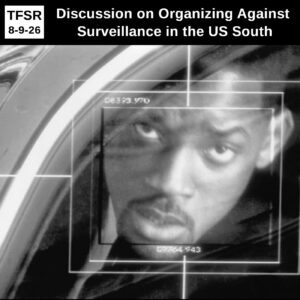
This week, you’ll hear a discussion with Ed from Southerners Against Surveillance Systems and Infrastructure / DeFlock, Ben of Communities Against Mass Surveillance in Asheville and Kelly from Nashville Community Safety Network others who share more about their local organizing to counter the nationwide push for interconnected surveillance networks. The push for increasingly more data on the public and the funneling of that information into police fusion centers has been most visible recently in struggles against Flock. We speak about spy cameras, the connections between private companies and the state surveillance apparatus, local organizing tactics and more.
Interesting links
- https://nashvillecommunitysafety.net/
- https://truthout.org/articles/the-fight-against-surveillance-cameras-is-a-struggle-for-democracy/
- https://sassisouth.org/projects/dhs-flock-fusus
- NC News Articles on Surveillance Tech: https://www.wral.com/news/nccapitol/surveillance-drivers-camera-alpr-license-plate-reader-nc-budget-public-safety-privacy-july-2026/
- Asheville article on Axon and RTIC: https://mountainx.com/news/local-government/asheville-city-councils-public-comment-process-vexes-some-constituents/
- On Greece’s OroraTech: https://apnews.com/article/greece-wildfires-satellites-europe-artificial-intelligence-8fe0df5f61f336ef59403f189a5a29de
- Article featuring information about Microsoft’s support of Israel: https://www.thecanary.co/global/world-analysis/2026/06/26/microsoft-worker-emails/
- https://noalprs.com/
Announcements
Gianis Michailidis supporters firefund
Supporters of anarchist Gianis Michailidis (imprisoned by the Greek state) took solidarity actions to escalate knowledge of his hunger and thirst strike demanding his release after completing his sentence. These supporters have an appeal coming to Lamia Court of Appeals, September 29, 2026, against rulings by conservative judges threatening 30 months of prison and thousands of Euros each in damages. You can learn more about the case and how to support it at Firefund: https://www.firefund.net/amfissaintervention . Further info at https://athens.indymedia.org/post/1641475/
. … . ..
Featured Track:
- TFSR by The Willows Whisper
Continue reading Discussion on Organizing Against Surveillance in the US South