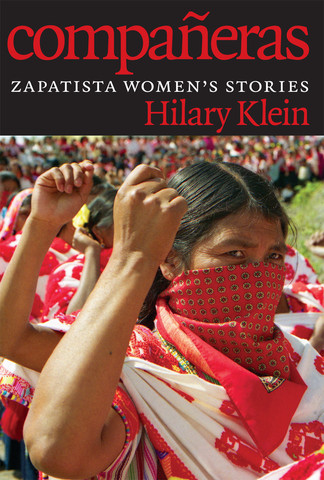
Over the hour, Hilary talks about her 7 years of living in Chiapas and recording the stories and experiences of women there, collecting stories on their behalf. The book covers the Zapatistas experiences before the EZLN uprising of 1994, during that period and after. Discussion address what gender, indigeneity and class looked like and how that’s changed in the Zapatista communities, the state of Chiapas and in Mexico. William and Hilary also explore the effects that the EZLN & La Otra Compaña have had on radicals and anarchists abroad, the origins of the EZLN, some parallels and distinctions between anarchism and Zapatismo and much more.
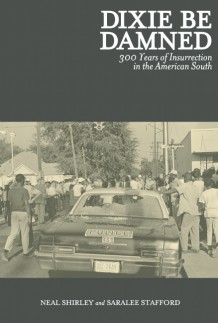
This week, we’re excited to present a conversation with Saralee Stafford and Neal Shirley, editors and authors of a new book out from AK Press entitled “Dixie Be Damned: 300 years of Insurrection in the American South”. The book is a study of Maroon, Indigenous, White, Black, worker, farmer, slave, indentured, women and men wrestling against institutions of power for autonomy and self-determination. All of this in a region stereotyped to be backwards, slow, lazy, victimized and brutal. The editors do a smash-bang job of re-framing narratives of revolt by drawing on complex and erased examples of cross-subjectivity struggles and what they can teach us today about current uprisings in which we participate.
Throughout the hour we explore some of the examples that became chapters in the book, critiques of narrative histories and academia and what new ways forward might be towards an anarchist historiography. Keep an ear out for Saralee and Neal’s book tour, coming to a bookspace near you.
This week, we speak with Jesse Cohn, author of the recent book, Underground Passages: Anarchist Resistance Culture 1848-2011, published by AK Press. In the book, Jesse explores trajectories in literature, cartoons, comics, music, poetry, drama produced at times by and or for or just conspicuously consumed by anarchists in europe, north and south america and asia during that time period. We talk about what Mr Cohn sees us as seeking to communicate, how we do that, and who we’re speaking to and how those questions change over time. More info on the book can be found at akpress.org
Jesse also puts out an invitation to listeners to share their stories of growing up in an anarchist household (what some might term “Black Diaper Babies”) or as the child of anarchists. The hope is to create a work that’d speak about what multi-generationality looks like or could look like. You can reach him at jcohn(aaat)pnc(d0t)edu with questions or stories.
As a quick update to last week’s episode about the hunger strike at OSP Youngstown by 6 prisoners: Hasan announced on April 15th, 2015 that he and 4 other prisoners stopped their hunger strike. Sedrick Tucker was continuing his hunger strike as of Friday, April 17th, 2015 due to private medical malpractice issues which he did not feel were being addressed by the demands that were met by the prison administrators. The support website, lucasvilleamnesty.org, stated in a recent post that the strike was a mixed victory, with some demands won and others not with the Warden conceding as little as possible. Hasan suggests that concerned people should contact that Ohio Medical Board and ask them to look into Sedrick Tucker’s treatment at the hands of Dr. James Kline. Hasan also suggests contacting ODRC Medical Service Administrator and ask to send another doctor to review Mr Tucker’s situation. It should be noted that Sean Swain also had issues with Dr. Kline during his last hunger strike. Have a pencil read to write this down if you want to contact ODRC’s Medical Admin.
Stuart Hudson Medical Service Administrator 770 W Broad St Columbus OH 43222
To reach out to Sedrick Tucker, here’s an address: Sedrick Tucker #117-137 OSP 878 Coitsville Hubbard Rd Youngstown, OH 44505
Writing to Sedrick or in concern for him has real effects in how the guards and doctors will treat him.
Download This Episode Jeremy Bentham (died 1832) on display at London College into the 1970’s. Note his mummified head between his feet…
This week William speaks with Emily Horne and Tim Maly about their book The Inspection House; An Impertinent Field Guide to Modern Surveillance, which was published in October 2014 by Coach House Books in their Exploded Views series. This interview comes right before the authors book tour of locations in Canada.
From the book’s website:
“In 1787, British philosopher and social reformer Jeremy Bentham conceived of the panopticon, a ring of cells observed by a central watchtower, as a labor-saving device for those in authority. While Bentham’s design was ostensibly for a prison, he believed that any number of places that require supervision—factories, poorhouses, hospitals, and schools—would benefit from such a design. The French philosopher Michel Foucault took Bentham at his word. In his groundbreaking 1975 study, Discipline and Punish, the panopticon became a metaphor to describe the creeping effects of personalized surveillance as a means for ever-finer mechanisms of control.
Forty years later, the available tools of scrutiny, supervision, and discipline are far more capable and insidious than Foucault dreamed, and yet less effective than Bentham hoped. Public squares, container ports, terrorist holding cells, and social networks all bristle with cameras, sensors, and trackers. But, crucially, they are also rife with resistance and prime opportunities for revolution.”
In the interview, Emily and Tim talk about Jeremy Bentham’s life, the intended and actual uses of the panopticon, the dangers of the well intentioned, and more!
The book has a lot of good stuff in it, history and analysis and humor. For more info about The Inspection House and about the author’s Canadian tour, you can visit http://www.chbooks.com/catalogue/inspection-house
The Panopticam (live streaming & timelapse from the top of the cabinet in which Jeremy Bentham sits)
Metro.UK article on Jeremy Bentham’s attendence record at the University College of London since his passing in 1838.
This week’s show features 4 conversations. For the fourth anniversary of the Final Straw Radio going on the air, we took it upon ourselves to have conversations with other people doing similar and different anarchist audio projects.
The first non-Bursts voice y’all will hear is that of John Zerzan, the second is Franklin Lopez, the third is a member of the Crimethinc Ex-Worker Podcast collective and the final two are Rydra and Bellamy. Introductions will ensue momentarily. We’ll be speaking this hour about the projects they work on, about the medium of radio and podcast, about what folks have learned while doing this work and about how we feel it fits into the anarchist project of the abolition of hierarchies, the state and capital, if not civilization.
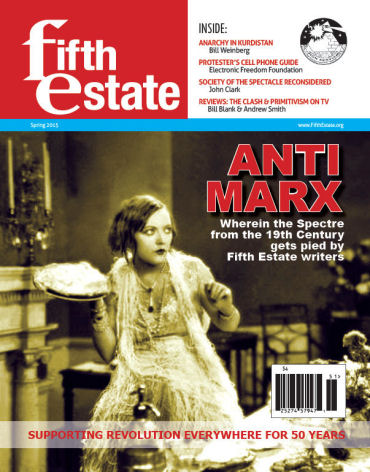
This week William talks with Peter Werbe, a long time editor of Fifth Estate magazine based in Detroit, MI for now. Fifth Estate is an “anarchist, anti-capitalist, anti-authoritarian, anti-profit project” which is published cooperatively three times a year, and this year marks its 50th year of publication. The magazine tackles current events, issues, theory, and praxis which would be of interest to an anarchist audience. To find out more about this project, and to subscribe, you can visit http://www.fifthestate.org
Peter and William talk about the magazine’s historical trajectory, from its inception in 1965 as a weekly, less political periodical, to its takeover by anarchists in 1975, to what it is today. They talk about the Eat The Rich Gang and its associations with Fifth Estate magazine, as well as directions the project could take. For more on Peter Werbe’s radio work, you can visit http://www.peterwerbe.com
This entire episode’s music is from The Layabouts, which is a Detroit based anarchist ska punk project (not to be confused with the London based techno-house project of the same name). Many of its members did or do work on Fifth Estate. For more on them you can visit http://www.thelayabouts.com
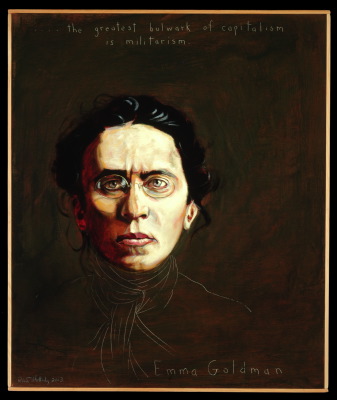
This week’s episode features a conversation with Candace Falk, founder and main editor at the Emma Goldman Papers Project in Berkeley, CA.
A quick introduction. Emma Goldman was born in what is today Lithuania in 1869, moving to the U.S. at the age of 16. As a Jewish woman immigrating from Eastern Europe to New York city, she was not alone in the struggles she would face in terms of racism, patriarchy, nativism capitalism and so more.
But Emma became involved in the Anarchist movement after the Haymarket Massacre and subsequent show trials of the next year and would grow to become known for a time as the most dangerous woman in America (J. Edgar Hoover). Her agitation and writing in support of free love, athiesm, the abolition of state and capitalism, contraception, beauty, literature, gender parity and more made tidal waves in her day and have continued to inspire people since she died in 1940. She aided would-be assassins, was jailed for agitating against World War I, was exiled to Russia, preached against the corruption of the Soviet Government, did propaganda work on behalf of the Spanish Anarchists in their Revolution, loved, lived and lost.
For the hour we talk about how Candace came to love Emma Goldman, the creation of the EGPP archives, what they provide, their relationship with the University of California at Berkeley and what the future may hold for the project. Candace also shares stories of how curating a history of Emma has bled into including bits of related and overlapping history and the rewards of this sort of seeking.
This week is a rebroadcast of William Goodenuff’s interview of last year with Paul. Z. Simons of Modern Slavery Magazine. The description will be found below. This week, Sean talks about Keith “Bomani Shakur” Lamar’s ongoing court appeal for his life. More updates on Lamar’s case can be found at http://www.lucasvilleamnesty.org , including audio from some of the court proceedings.
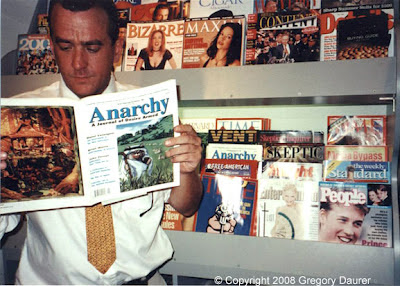
This week William talks with Paul Z. Simons, a contributor to and editor of the journal Modern Slavery; A Libertarian Critique of Civilization available at http://modernslavery.calpress.org. Mr. Simons is also an essayist and former contributor/editor of Anarchy: A Journal of Desire Armed and Out of Anarchy among other projects. Modern Slavery delves into the conception of a modern slavery through an explicitly radical discussion of the history and present condition of wage economies and wage slavery. In addition, the journal showcases poetry, short stories, book reviews, and art. If you wish to become a contributor, you can do so through the journals website.
Among other topics, William and Paul discuss the inspiration for and inception of the journal, some forms a post collapse society could take, other forms of modern day slavery, and the socially chaotic potential of horror movies.
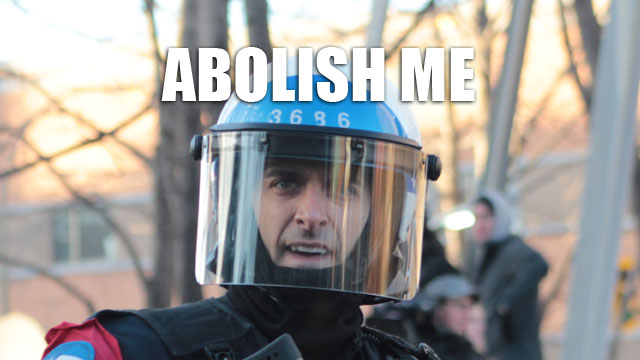
Today’s show features an interview with the Portland-based author and activist, Kristian Williams. Williams speaks on his first book, Our Enemies in Blue (a history of policing in America), on recent articles about community policing and the counterinsurgency training shared between the U.S. military and domestic law enforcement agencies and the growing movement calling for the abolition of police in the United States, and the Pacific Northwest in particular).
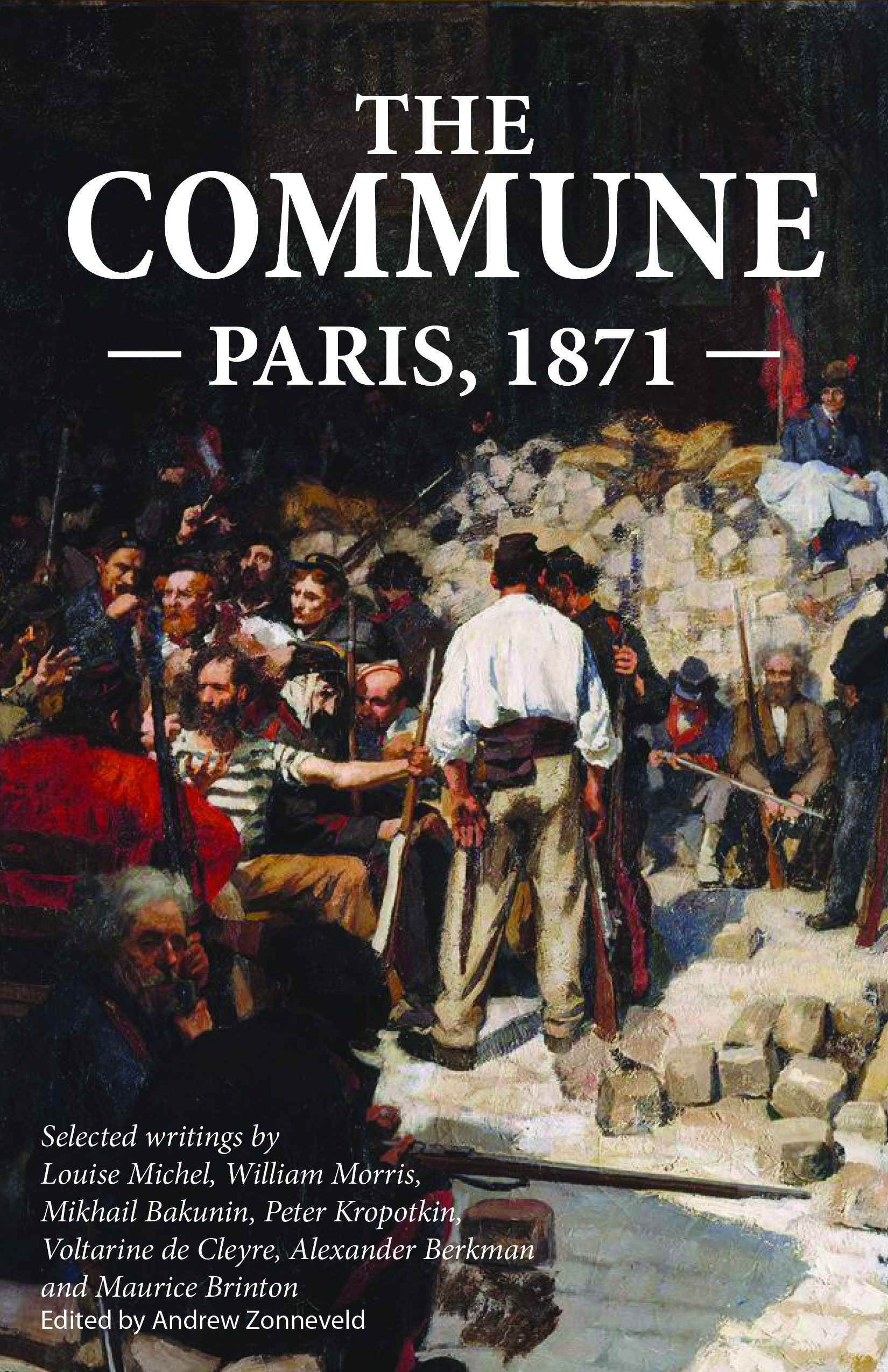
On this week’s show, Disembodied Voice speaks with Andrew Zonneveld, managing editor at On Our Own Authority! Publishing, and editor of a recent collection of essays entitled “The Commune: Paris, 1872”. On Our Own Authority! is an Atlanta-based autonomous research press that has put out over a dozen titles since its founding only two short years ago. “The Commune: Paris, 1872” is a short collection of articles and essays in which various anarchist writers react to and reflect on this momentous event: a 71-day rebellion which, before it was crushed, saw the Parisian working class carry out some fairly inspirational experiments in radical democracy and worker self-management, all without anyone telling them how! The articles within the collection span a period beginning just after the Commune has fallen, through to the 1960s, providing a fascinating range of historical moments from which to view this important episode in radical action.
The presumed topic of the interview was the rich revolutionary history and legacy of the Paris Commune, but the ensuing conversation takes many an interesting and unexpected turn, with Zonneveld sharing his research and thoughts on an array of topics, from Voltairine de Cleyre’s involvement in the Mexican Revolution, to slave rebellions in Guyana, to the intersections between the anarchist and feminist movements in early 20th century Japan.