In the first segment of the episode, William spoke with Anne Peterman of the Global Justice Ecology Project, following up on the GE Trees Action Camp which took place in late September outside of Asheville. To hear the previous interview you can go to http://thefinalstrawradio.noblogs.org and search GE Trees, and to learn more about GJEP and to donate to Anne and Ruddy’s legal defense, you can go to http://nogetrees.org
The bulk of the hour we’ll hear the second half of the Former Prisoner Panel proceeding the North American Anarchist Black Cross conference in Denver, 2015.
On the panel you’ll hear from:
Jerry Koch, an anarchist who was incarcerated over 9 months for refusing to testify before a grand jury (for a second time) in New York, as he talks about his incarceration and his release.
Eric McDavid is a green anarchist who served 10 years of a 20 year sentence before release in January of 2015.
Lynne Stewart is a movement who served 2.5 years of a 10 year sentence, released due on compassionate grounds due to terminal cancer.
Kazi Toure is a formerly incarcerated member of the marxist guerrilla group United Freedom Fighters/Ohio 7.
Jihad Abdulmumit is national chairperson for the Jericho Movement and spent 23 years in prison for involvement in the Black Panther Party and the Black Liberation Army.
Mark Cook was a social prisoner who founded a Panther Chapter in prison and became involved in the George Jackson Brigade.
In this presentation, the panelists speak about experiences of re-entry, trauma of incarceration, support they’ve received, experiences behind the bars and critiques of how prisoners are supported. This event was hosted by Denver Anarchist Black Cross (http://denverabc.wordpress.com)
We lacked time to announce this benefit for Stephanie Wilson, a dear friend who was struck by a car while attempting to render care to a dog who’d been previously hit by another vehicle. The benefit is to raise medical funds for Stephanie. More info here: https://www.youcaring.com/stephanie-wilson-454345
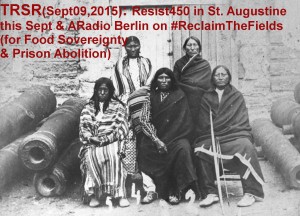
This week we spoke with Bobby C. Billie and Shannon Larsen of the Resist 450 Coalition. This coalition is set up to protest the so called “450th Commemoration” Celebration to be held in St Augustine FL at the beginning of September, which will mark the 450th anniversary of the settling of that city by Juan Ponce de Leon and Pedro Menendez, colonizers from Spain. In this interview we talk about indigenous struggle in St Augustine, the Doctrine of Discovery, the Action Camp which will occur on September 5th thru 8th, and more! To get involved with the Action Camp, or to donate to this cause, you can see all the information you’ll need at http://resist450.org
Additionally this week also we have audio from our comrades at ARadio Berlin! Anarchist Radio Berlin, which can be found at http://aradio.blogsport.de, did this interview with a UK-based organizer from the Reclaim the fields initiative, and they talk about the planned international camp in North-Wales, the relationship of food sovereignty and the prison system, and the topic of prison abolition as such.
You can send these folks feedback and comments at: aradio-berlin(at)riseup(dot)net Thanks to these comrades for sharing this audio! Stay tuned for more from ARadio Berlin next week.
In a bit of news, the trial of the Tarnac 10 is set to begin soon, minus the charges of “Terrorist Association.” The Tarnac case stems back to 2009 in Tarnac, France, the site of a farm commune on which 9 folks were arrested and accused of attempting sabotage on a high speed rail line. The case allegedly also linked the arrested, including Julian Coupat and Yildune Lévy, to the publishing group, The Invisible Commitee. The Invisible Commitee, which recently published “To Our Friends” is in the lineage of Tiqqun magazine, of which Coupat was a founder. http://www.anarchistnews.org/content/tarnac-eight-sent-trial-without-designation-terrorist-organization
A Virginian Anarchist by the name of Stephen Loughman was arrested a week after attending the anti-KKK rally in Columbia, SC, on July 18th. Stephen’s cellphone was dropped and he was arrested when he attempted to pick it up from the department of Sheriff Leon Lott. Stephen Loughman’s being accused attempting to incite hatred against the KKK, yelling profanity at the white supremacists and being in traffic. He’s being smeared in local media and by the Sheriff of being a career troublemaker who was attempting to incite the crowd to riot. He sounds like a pretty stand-up guy to us. You can find out more and support Stephen by visiting http://gofundme.com/e6b3tukuc . More at https://itsgoingdown.org/virginia-anarchist-arrested-week-sc-anti-klan-rally-support-needed/
Sean Swain speaks his piece on the recent drug delivery via drone, which occurred on July 29 at the Mansfield Correctional Institution some 65 miles southwest of Cleveland, OH. It contained almost a quarter of an ounce of heroin, over 2 ounces of marijuana and more than 5 ounces of tobacco. Sean speculates as to what other uses drones might have, and leaves us with words to ponder.
This week we spoke with members of Maharlika Integral Emergence, a collective in Davao. Davao is a large city in the south east of the archipelago of Maharlika, also known as The Philippines. We talk for the hour on the emergence of anarchism in this country, anti-colonial indigenous struggle, anarcho-punk, eco-resistance, green and post-anarchism, permaculture, anti-extraction and land struggles and more. Maharlika Integral Emergence is a collective in Davao working with communities to promote self-care, explore autonomy, build alternatives to the deadly duo of State and Capital and it’s ecocidal path. We apologize for the quality of the audio, at times it becomes difficult to hear the collective members due to tech issues. Check out ashevillefm.org/the-final-staw to find the blog entry for this episode which includes hyperlinks to some of the projects and publications coming out of Maharlika. For instance, here’s a pdf about projects that that MIE are involved in.
But first, a couple of announcements. If you’re in the Asheville area, we’d like to remind you that tonight, Sunday the 12th at 5pm is the grande-opening of Firestorm Cafe & Books at it’s new location at 610 Haywood Road at the intersection of Haywood Rd & State St in West Asheville. From their facebook event: “It’s been sixteen months since we closed our doors at 48Commerce Street… We’re ready to start the next chapter! Join our seven year old workers co-operative for a day long celebration, featuring free coffee and other give-aways plus a 5pm local author showcase!
Located directly across State Street from Sunny Point Cafe, our new store features a unique selection of books for young folks and adults alike. Curious readers will find not only the rich assortment of titles on gardening, green living and political radicalism, for which our co-op is already known, but also an expanded inventory of children’s books, classics and speculative fiction.” More at http://firestorm.coop
Relatedly, there’s a squatted anarchist social and community space working around some of the same causes as MIE. The space is called Feral Crust and in Manila operate a squatted infoshop, school and garden in a small squatted neighborhood. To contact them for more questions, drop them a line at feralcrust(aaat)riseup(dot) net
We’d also like to mention that AshevilleFM is currently at the Big Crafty Festival in Asheville from noon-6pm today, come check out the booth and sign up to be a volunteer!
Also an update on the occupation at the Che Cafe on the campus of the University of California at San Diego: “On JULY 15 at 2 PM there will be a meeting with UCSD Chancellor Khosla. For the FIRST TIME, representatives of the Che Cafe Collective and CCSN will meet with Khosla to see if he will call off the eviction. Che supporters are calling for a big crowd to rally outside the meeting. It’s requested that you come if you can and spread the word! Directions to Office of the Chancellor at www-act.ucsd.edu/maps/ enter search for “Office of the Chancellor”. Address is University Center 107, and it’s located facing the UCSD Town Square just south and west of Price Center.”
We here at The Final Straw are soliciting sticker/poster/logo design to provide fascinating swag for our listeners! The design must include our web address, show name & imagery reflecting the nature of the radio show. Chosen artists will receive gifts of t-shirts and other anarchy goodies. You can email your designs in pdf form to bursts(attt)ashevillefm(ddot)org or a physical copy can be sent to: The Final Straw c/o AshevilleFM 864 Haywood Rd, Asheville, NC 28806
A reminder: The Klu Klux Klan has called for a rally at the steps of the state capitol of South Carolina in Colombia on Saturday the 18th at 3pm. Folks are planning a counter-demonstration on the day to make it known that these jokers are not welcome in the streets. Check out http://columbiascdemocallout.tumblr.com/ for more info, or follow them on their twitter handle, @antiracistSC. From their site:
“On Saturday, July 18th, the Loyal White Knights of the Ku Klux Klan will assemble on the statehouse grounds in Columbia, SC. And we will confront them.
This rally is part of a recent wave of anti-Black terror, from the Charleston massacre to the arson of Black churches, that has strategically sought to build upon a white racist backlash against the #BlackLivesMatter, anti-police uprisings of the past year.
We call upon all those who can #BlackLivesMatter activists, community organizers, anti-racists, anarchists and other radicals, and anyone else furious with racism and the police—to converge on Columbia, confront the Klan, and defy their message of white supremacy. History has shown—from the armed standoff against a lynch mob in Columbia, TN, in 1946 to the 1958 Battle of Hayes Pond, from the Deacons for Defense to the armed defiance of Monroe, NC’s NAACP chapter, from the 1979 Greensboro Massacre to the 1997 confrontation with the Klan in downtown Asheville, NC—that we must oppose white supremacist organizing actively and physically, in our streets and neighborhoods.
The KKK is only a small group, whose ability to inflict racist violence actually pales in comparison to that of structures of oppression like the police, the economy, and the state. But the sentiment that groups like the KKK hold runs deep through the currents of whiteness in this country, and is a major obstacle to our struggles against these larger structures. Explicit manifestations of white supremacy like the Klan are one way that the state will seek to contain the #BlackLivesMatter organizing and anti-police riots of the last year; at this historic juncture, a large Klan rally in the South cannot go unchallenged.
Bring banners, bring a friend, and bring your anger and rage against the white supremacy that courses through the veins of this society. See you in Columbia.”
Along the lines of last week’s announcement of great audio projects to check out outside of asheville, I’d suggest folks interested in a fantastic North American prison related show give a listen to The Prison Radio Show on CKUT, out of McGill University in Montreal. The show airs on the second Thursday of every month between 5-6 pm CST as part of CKUT News’s Off The Hour & the fourth Friday of every month between 11am and 12pm CST. More at http://prisonradioshow.wordpress.com
Also for a great look at audio anarchy in the Philippines – and to see what this week’s guests typically work on – you can check out the pirate radio station RADYO ITIM at https://radyoitim.wordpress.com/, or at 107.9FM if you are listening in Davao.
Out of Middleton, Connecticut & Wesleyan University, WESU hosts a show called Anarchy On Air, a student anarchist collective radio show featuring interviews, panels, action updates and more. This show was formerly incarnated as The Horizontal Power Hour. This show More can be found at http://anarchyonairwesu.tumblr.com/ and it can be heard 2nd/4th Tuesdays 4:00-4:55 pm EST
Anarcho-primitivist & philosopher John Zerzan cohosts the weekly, years running, hour-long radio show Anarchy Radio on 88.1 KWVA at the University of Oregon, Eugene. Check out archives of the show at http://johnzerzan.net/radio to hear him and cohosts discuss recent news around technology, school shootings, alienation, ecological destruction and ideas. The show airs Tuesday’s at 7pm PST and express your views by calling 541-346-0645 during the live broadcast.
Over the hour, Hilary talks about her 7 years of living in Chiapas and recording the stories and experiences of women there, collecting stories on their behalf. The book covers the Zapatistas experiences before the EZLN uprising of 1994, during that period and after. Discussion address what gender, indigeneity and class looked like and how that’s changed in the Zapatista communities, the state of Chiapas and in Mexico. William and Hilary also explore the effects that the EZLN & La Otra Compaña have had on radicals and anarchists abroad, the origins of the EZLN, some parallels and distinctions between anarchism and Zapatismo and much more.
This week, we’re excited to present a conversation with Saralee Stafford and Neal Shirley, editors and authors of a new book out from AK Press entitled “Dixie Be Damned: 300 years of Insurrection in the American South”. The book is a study of Maroon, Indigenous, White, Black, worker, farmer, slave, indentured, women and men wrestling against institutions of power for autonomy and self-determination. All of this in a region stereotyped to be backwards, slow, lazy, victimized and brutal. The editors do a smash-bang job of re-framing narratives of revolt by drawing on complex and erased examples of cross-subjectivity struggles and what they can teach us today about current uprisings in which we participate.
Throughout the hour we explore some of the examples that became chapters in the book, critiques of narrative histories and academia and what new ways forward might be towards an anarchist historiography. Keep an ear out for Saralee and Neal’s book tour, coming to a bookspace near you.
This week, we speak with Jesse Cohn, author of the recent book, Underground Passages: Anarchist Resistance Culture 1848-2011, published by AK Press. In the book, Jesse explores trajectories in literature, cartoons, comics, music, poetry, drama produced at times by and or for or just conspicuously consumed by anarchists in europe, north and south america and asia during that time period. We talk about what Mr Cohn sees us as seeking to communicate, how we do that, and who we’re speaking to and how those questions change over time. More info on the book can be found at akpress.org
Jesse also puts out an invitation to listeners to share their stories of growing up in an anarchist household (what some might term “Black Diaper Babies”) or as the child of anarchists. The hope is to create a work that’d speak about what multi-generationality looks like or could look like. You can reach him at jcohn(aaat)pnc(d0t)edu with questions or stories.
As a quick update to last week’s episode about the hunger strike at OSP Youngstown by 6 prisoners: Hasan announced on April 15th, 2015 that he and 4 other prisoners stopped their hunger strike. Sedrick Tucker was continuing his hunger strike as of Friday, April 17th, 2015 due to private medical malpractice issues which he did not feel were being addressed by the demands that were met by the prison administrators. The support website, lucasvilleamnesty.org, stated in a recent post that the strike was a mixed victory, with some demands won and others not with the Warden conceding as little as possible. Hasan suggests that concerned people should contact that Ohio Medical Board and ask them to look into Sedrick Tucker’s treatment at the hands of Dr. James Kline. Hasan also suggests contacting ODRC Medical Service Administrator and ask to send another doctor to review Mr Tucker’s situation. It should be noted that Sean Swain also had issues with Dr. Kline during his last hunger strike. Have a pencil read to write this down if you want to contact ODRC’s Medical Admin.
Stuart Hudson Medical Service Administrator 770 W Broad St Columbus OH 43222
To reach out to Sedrick Tucker, here’s an address: Sedrick Tucker #117-137 OSP 878 Coitsville Hubbard Rd Youngstown, OH 44505
Writing to Sedrick or in concern for him has real effects in how the guards and doctors will treat him.
Download This Episode Jeremy Bentham (died 1832) on display at London College into the 1970’s. Note his mummified head between his feet…
This week William speaks with Emily Horne and Tim Maly about their book The Inspection House; An Impertinent Field Guide to Modern Surveillance, which was published in October 2014 by Coach House Books in their Exploded Views series. This interview comes right before the authors book tour of locations in Canada.
From the book’s website:
“In 1787, British philosopher and social reformer Jeremy Bentham conceived of the panopticon, a ring of cells observed by a central watchtower, as a labor-saving device for those in authority. While Bentham’s design was ostensibly for a prison, he believed that any number of places that require supervision—factories, poorhouses, hospitals, and schools—would benefit from such a design. The French philosopher Michel Foucault took Bentham at his word. In his groundbreaking 1975 study, Discipline and Punish, the panopticon became a metaphor to describe the creeping effects of personalized surveillance as a means for ever-finer mechanisms of control.
Forty years later, the available tools of scrutiny, supervision, and discipline are far more capable and insidious than Foucault dreamed, and yet less effective than Bentham hoped. Public squares, container ports, terrorist holding cells, and social networks all bristle with cameras, sensors, and trackers. But, crucially, they are also rife with resistance and prime opportunities for revolution.”
In the interview, Emily and Tim talk about Jeremy Bentham’s life, the intended and actual uses of the panopticon, the dangers of the well intentioned, and more!
The book has a lot of good stuff in it, history and analysis and humor. For more info about The Inspection House and about the author’s Canadian tour, you can visit http://www.chbooks.com/catalogue/inspection-house
The Panopticam (live streaming & timelapse from the top of the cabinet in which Jeremy Bentham sits)
Metro.UK article on Jeremy Bentham’s attendence record at the University College of London since his passing in 1838.
This week’s show features 4 conversations. For the fourth anniversary of the Final Straw Radio going on the air, we took it upon ourselves to have conversations with other people doing similar and different anarchist audio projects.
The first non-Bursts voice y’all will hear is that of John Zerzan, the second is Franklin Lopez, the third is a member of the Crimethinc Ex-Worker Podcast collective and the final two are Rydra and Bellamy. Introductions will ensue momentarily. We’ll be speaking this hour about the projects they work on, about the medium of radio and podcast, about what folks have learned while doing this work and about how we feel it fits into the anarchist project of the abolition of hierarchies, the state and capital, if not civilization.
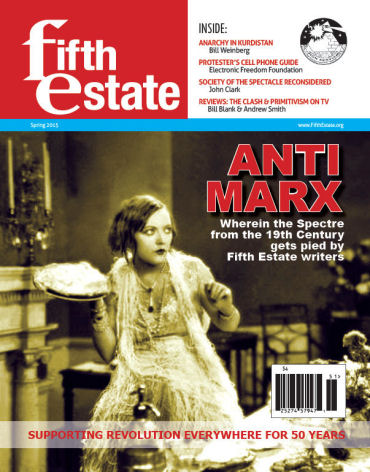
This week William talks with Peter Werbe, a long time editor of Fifth Estate magazine based in Detroit, MI for now. Fifth Estate is an “anarchist, anti-capitalist, anti-authoritarian, anti-profit project” which is published cooperatively three times a year, and this year marks its 50th year of publication. The magazine tackles current events, issues, theory, and praxis which would be of interest to an anarchist audience. To find out more about this project, and to subscribe, you can visit http://www.fifthestate.org
Peter and William talk about the magazine’s historical trajectory, from its inception in 1965 as a weekly, less political periodical, to its takeover by anarchists in 1975, to what it is today. They talk about the Eat The Rich Gang and its associations with Fifth Estate magazine, as well as directions the project could take. For more on Peter Werbe’s radio work, you can visit http://www.peterwerbe.com
This entire episode’s music is from The Layabouts, which is a Detroit based anarchist ska punk project (not to be confused with the London based techno-house project of the same name). Many of its members did or do work on Fifth Estate. For more on them you can visit http://www.thelayabouts.com
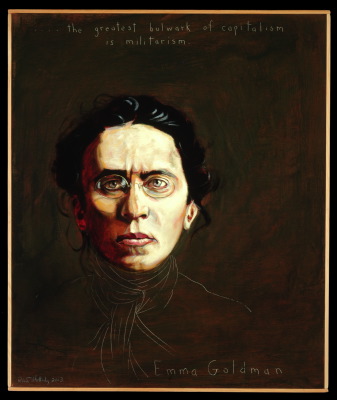
This week’s episode features a conversation with Candace Falk, founder and main editor at the Emma Goldman Papers Project in Berkeley, CA.
A quick introduction. Emma Goldman was born in what is today Lithuania in 1869, moving to the U.S. at the age of 16. As a Jewish woman immigrating from Eastern Europe to New York city, she was not alone in the struggles she would face in terms of racism, patriarchy, nativism capitalism and so more.
But Emma became involved in the Anarchist movement after the Haymarket Massacre and subsequent show trials of the next year and would grow to become known for a time as the most dangerous woman in America (J. Edgar Hoover). Her agitation and writing in support of free love, athiesm, the abolition of state and capitalism, contraception, beauty, literature, gender parity and more made tidal waves in her day and have continued to inspire people since she died in 1940. She aided would-be assassins, was jailed for agitating against World War I, was exiled to Russia, preached against the corruption of the Soviet Government, did propaganda work on behalf of the Spanish Anarchists in their Revolution, loved, lived and lost.
For the hour we talk about how Candace came to love Emma Goldman, the creation of the EGPP archives, what they provide, their relationship with the University of California at Berkeley and what the future may hold for the project. Candace also shares stories of how curating a history of Emma has bled into including bits of related and overlapping history and the rewards of this sort of seeking.